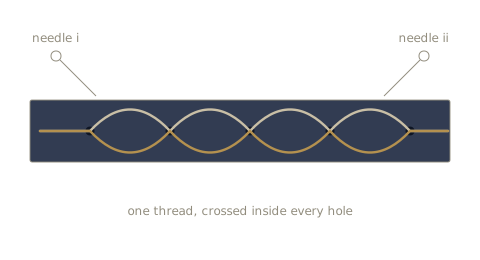
A machine cannot make this stitch. Not a better machine, not a faster one — the geometry forbids it. That single fact governs everything we can and cannot do.
A machine locks one thread against another. Cut it once, and the seam unzips.
A sewing machine uses two threads that never meet. One is carried above the work, one below, and they are hooked around each other at every hole. Pull one and the whole line runs — which is why a machine-sewn seam fails along its whole length once it fails anywhere.
A saddle stitch uses one thread with a needle at each end. Both needles pass through the same hole, from opposite sides, and the thread crosses itself inside the leather. Each stitch is independently locked.
Cut one and the rest hold. The seam does not run. This is not a marketing claim; it is a property of the knot.
A harness outlives the horse. That is the standard, and it is not a figure of speech.
Everything difficult about our business follows from that table. We cannot scale by hiring faster people, because there are no faster people — there is only the stitch, and the stitch takes what it takes. We can make more only by making longer, or by making worse.
So we make few, and we number them.
Tanned with bark and tannin over weeks, not with chromium salts over hours. It starts pale and stiff and darkens with your hands. It is the only leather that earns a patina rather than simply wearing out.
Woven narrow on a shuttle loom, at a fraction of the speed of a projectile loom, with a self-finished edge that needs no overlock. Denser, heavier, and it fades where you fold rather than everywhere at once.
Linen, not polyester. Waxed on the bench before it is used, so it grips the hole it sits in. It is the thread a saddler has always used, for the reason a saddler has always used it.
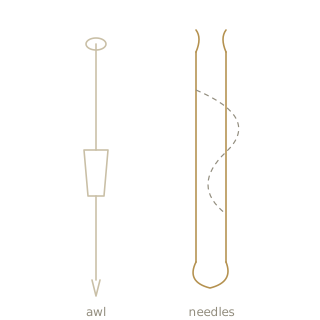
Fig. iii — awl and needles. The awl comes first, always.
The hole is not made by the needle. It is made by a diamond-section awl, pushed through by hand at a consistent angle — and the angle is why a hand seam looks the way it does. The stitches lean, evenly, like handwriting.
Get the angle wrong and the seam is ugly forever. There is no undoing it. This is the part that takes years, and the part nobody photographs.
The ends are not knotted. They are cut, melted and pressed back into the leather, so there is nothing to catch and nothing to pick at. A finished seam should look as though the leather simply grew that way.